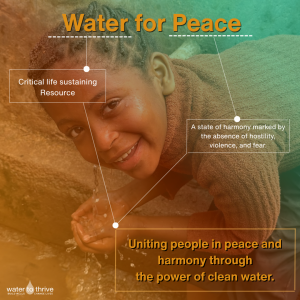
Giving Tuesday is a national day of giving. This year for Giving Tuesday we are thinking big and aiming to bring clean, safe water to more than 1,000 people through the building of three new wells in Ethiopia! We cannot do it without you. If you or your group has already sponsored a well, you understand the life-giving impact of clean water.
This year our focus is to support the efforts of our partners in Ethiopia, SCES, peace building projects. In addition to all the wonderful blessings that result from clean water access, SCES is taking things a step further by strategically placing wells between neighboring conflicting tribes.
We are calling this, The Well Between us, Peace Project.
see below, the recent report form SCES on these types of projects.
Water for Peace: How a Shared Water Point Is Bringing Two Communities Together
From conflict and division to dialogue, cooperation, and peaceful coexistence
For nearly seven years, two neighboring communities living along the boundary between Sidama and Oromia regions in Ethiopia have experienced recurring conflict, turning what should have been a peaceful neighborhood into an area marked by tension, mistrust, and insecurity.
The communities of Borra 01 Kebele in Sidama Region and Ararso Kebele in Oromia Region have long been separated by disputes over land use, agricultural activities, grazing areas for livestock, and competing political and ethnic interests. These tensions have repeatedly escalated into violent confrontations, resulting in the tragic loss of several lives and damaging relationships between people who once shared the same social and economic environment.
Over time, fear and mistrust became part of everyday life. Crossing into neighboring areas, interacting with one another, and sharing community resources became increasingly difficult.
But what if something as basic as water could become a bridge between divided communities?
Recognizing the close connection between resource competition and local conflict, the Ethiopian Evangelical Church Mekane Yesus – SCES introduced an integrated Water, Sanitation and Hygiene (WASH) and peace building project aimed at addressing both the immediate needs of the communities and the underlying causes of conflict.
One of the project’s most meaningful interventions was the construction of a shared water point strategically located along the boundary between the two regions. Rather than simply providing access to clean water, the water point was designed to create an opportunity for interaction, communication, and rebuilding trust.
Today, women, children, and other community members from both Borra 01 and Ararso come to the same water point. People who once hesitated to approach one another now have opportunities to meet, exchange greetings, communicate, and gradually rebuild relationships. Water fetching, once a daily activity potentially affected by insecurity, is increasingly becoming a space for peaceful interaction and cooperation.
The transformation goes beyond access to water.
Through the project, a WASH Committee was established to support the proper management, protection, and sustainability of the shared water facility. Importantly, the committee’s role extends beyond maintaining the water point. Its members also participate in what is known as the Boundary Partner Meetings, an inclusive community dialogue platform that brings together WASH Committee representatives, elders, women, youth, and religious leaders from both communities.
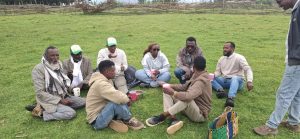 During these meetings, participants openly discuss issues affecting their communities, including peaceful coexistence, shared water resource management, community safety, and other concerns requiring collective decisions. They listen to one another, identify common challenges, negotiate solutions, and strengthen their shared responsibility for maintaining peace.
By bringing different community groups around the same table, the meetings are helping transform relationships that were once characterized by division into relationships built on dialogue, mutual understanding, and cooperation. Women and young people, who are often directly affected by conflict, also have an opportunity to contribute their voices to decisions that shape their communities’ future.
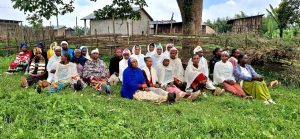 The most powerful change is that water is no longer viewed only as a resource to be accessed; it is becoming a shared responsibility and a foundation for peace.
The experience of Borra 01 and Ararso demonstrates that sustainable peace requires more than resolving disputes after violence has occurred. It requires addressing the everyday challenges that create competition, strengthening community relationships, and building institutions that encourage dialogue and collective action.
While challenges remain, the shared water point and Boundary Partner Meetings offer a promising pathway toward lasting peaceful coexistence between the two communities.
For donors and development partners, this experience highlights the transformative potential of integrated WASH and peace building interventions. An investment in water infrastructure can achieve much more than improving access to water. When combined with inclusive dialogue, community participation, and local peace building mechanisms, it can help prevent conflict, restore relationships, and create opportunities for communities to build a shared future.
Because water sustains life, but when communities share it, water can also sustain peace.
EECMY-DASSC is demonstrating that sometimes the first step toward peace is not a peace agreement, but a shared water point where neighbors can meet again.